Before you begin
Start with the questions
History, genetics, people and the medical future of a plant the world is still debating
Cannabis is a plant genus used for materials and biologically active compounds. THC can cause intoxication; CBD does not produce the same high. Benefits and risks depend on the preparation, composition, person and context rather than the plant name alone. NCCIH
At an ancient shrine in Tel Arad, researchers identified cannabis residues on an altar dating to the eighth century BCE. Millennia later, laboratories measure compounds in flowers while patients, farmers, officials and entrepreneurs ask very different questions about the same plant. What has changed is not simply the plant's potency. It is also the meaning that society gives it. Arie and colleagues, 2020
BUDS THAILAND approaches this story with curiosity beyond either admiration or fear. We sell neither flowers nor seeds. Cannabis history contains craft, injustice, scientific discovery, economic opportunity and harms that deserve an honest account. Understanding those things together makes a more responsible relationship with the plant possible.
Legal developments and competition results were checked through 7 October 2026. The year and limits of individual sources are identified where they matter.
A world–Thailand timeline
| Period | Evidence or development | Explore |
|---|---|---|
| Eighth century BCE | Cannabis residues at the Tel Arad shrine: archaeological evidence | Introduction and early evidence |
| Around 500 BCE | Jirzankal braziers in a funerary context | Early evidence |
| Early centuries CE | Dating of the transmitted Shen Nong Ben Cao Jing | Tradition and texts |
| 1925 / 1930 / 1937 | International controls / FBN established / US tax legislation | Prohibition |
| 1935 / 1979 | Publication of Thailand's older cannabis statute / broader narcotics framework | Thailand |
| 2019 / 2022 | Thai medical opening / changed narcotics listing | Thai law |
| 2020 | CND removes cannabis from Schedule IV, retaining Schedule I | WHO's role |
| 2025–2026 | Revised Thai controls on flowers, supply and establishments | Recent framework |
The corresponding chapters link the sources behind this overview. It does not establish humanity's first use of the plant.
One plant, several meanings
Hemp commonly appears in fibre, seed and THC-threshold regulation. A legal distinction need not match a botanical boundary, and one jurisdiction's threshold should not be applied automatically elsewhere. UNCTAD on industrial hemp
For a weaver, the story begins with the stem. For a drug researcher, it may begin with a measurable, reproducible preparation. Someone examining a flower may be interested in its structure, aroma and sensory qualities. All three perspectives are useful, but they answer different questions. A complex aroma does not establish superior medical efficacy, and an industrial use does not give every part of the plant the same legal status.
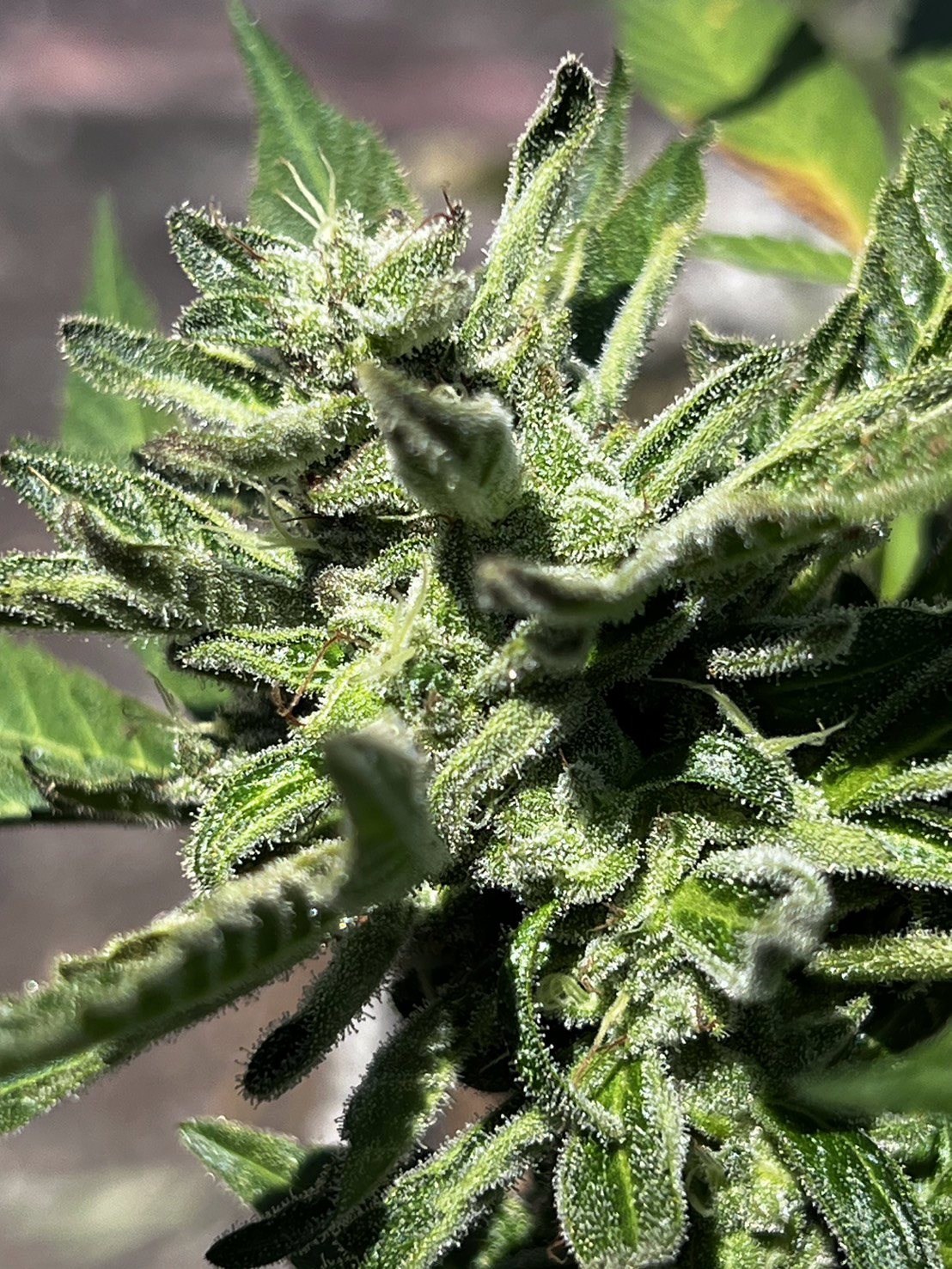
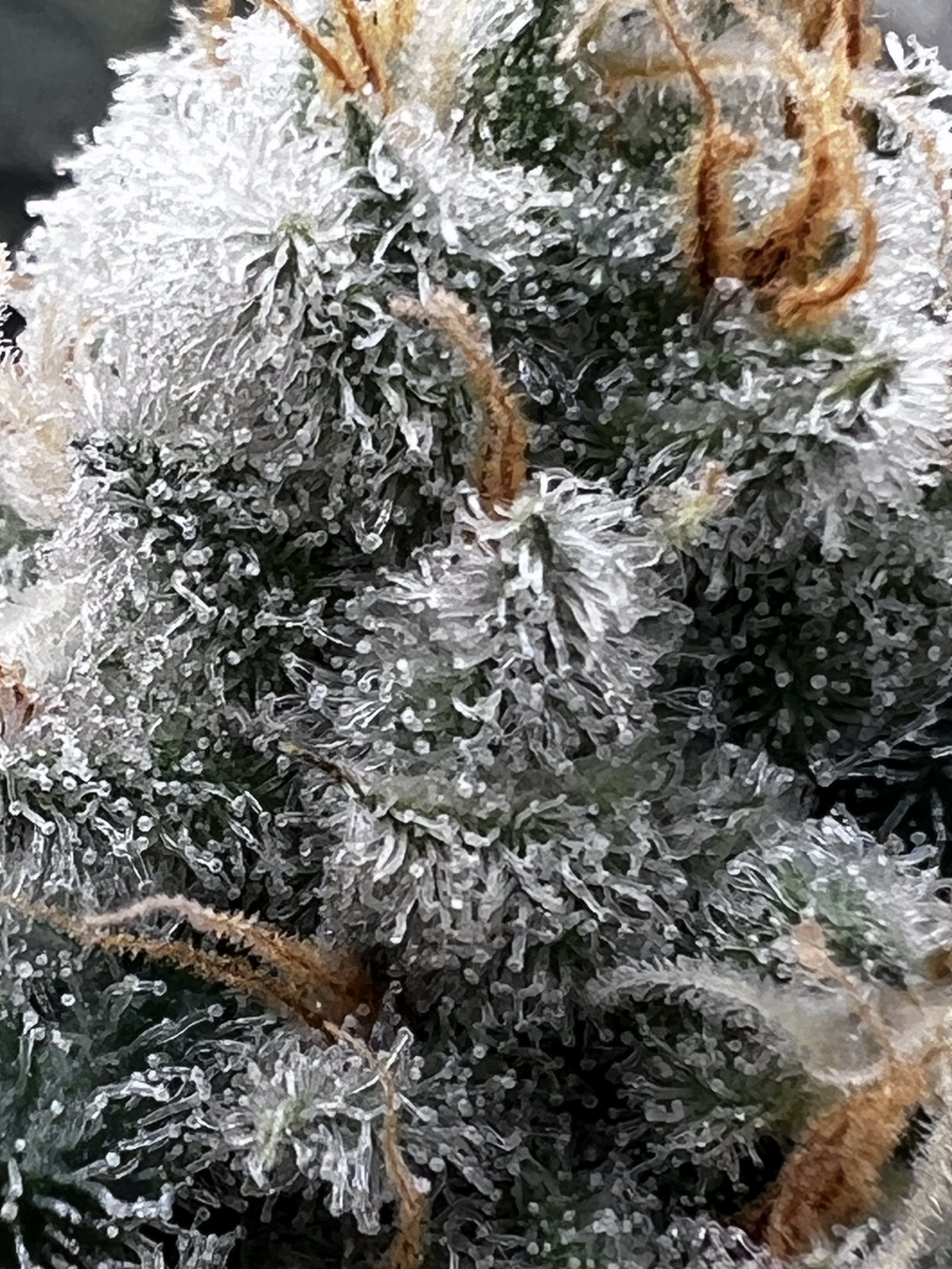
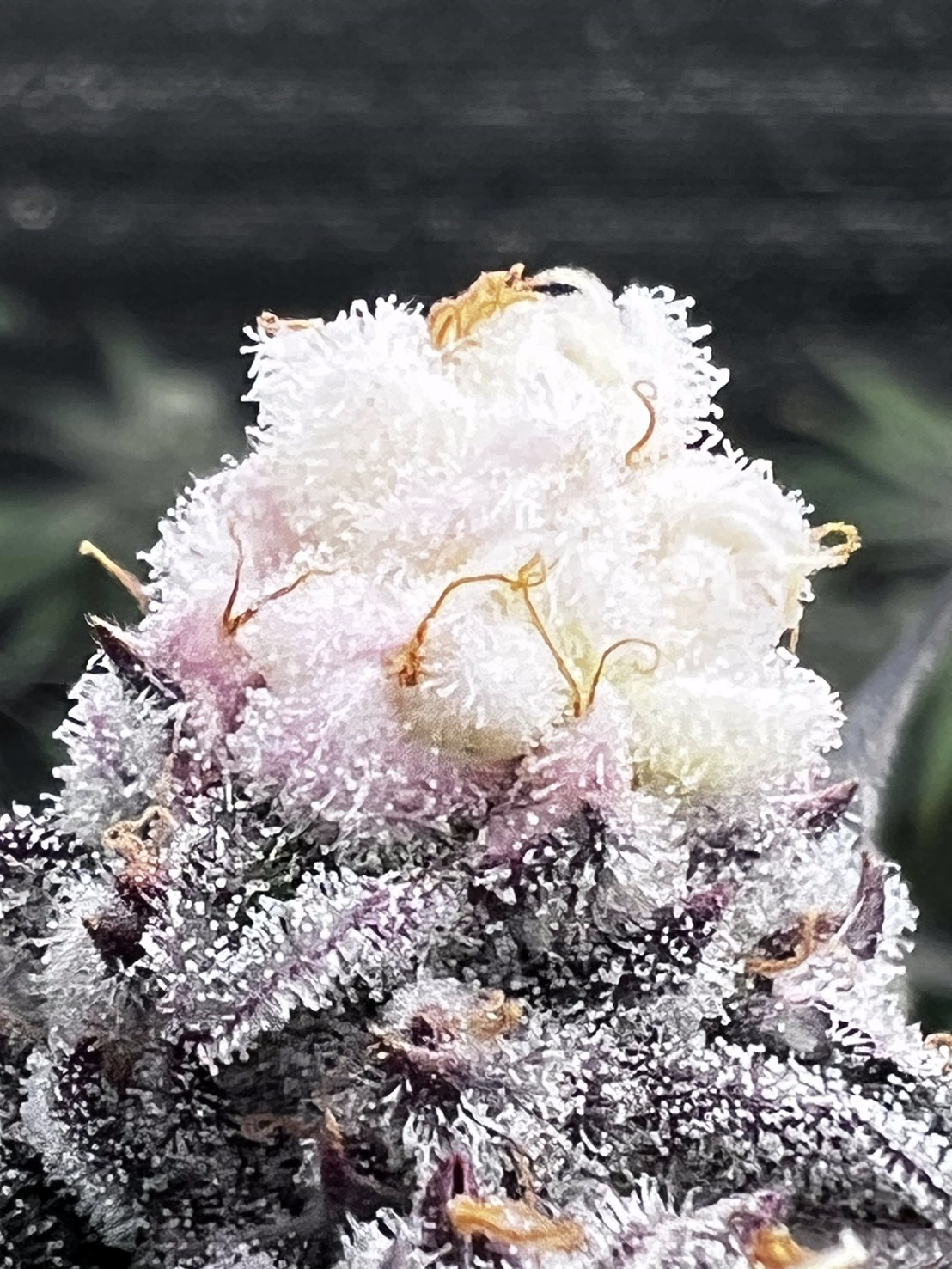
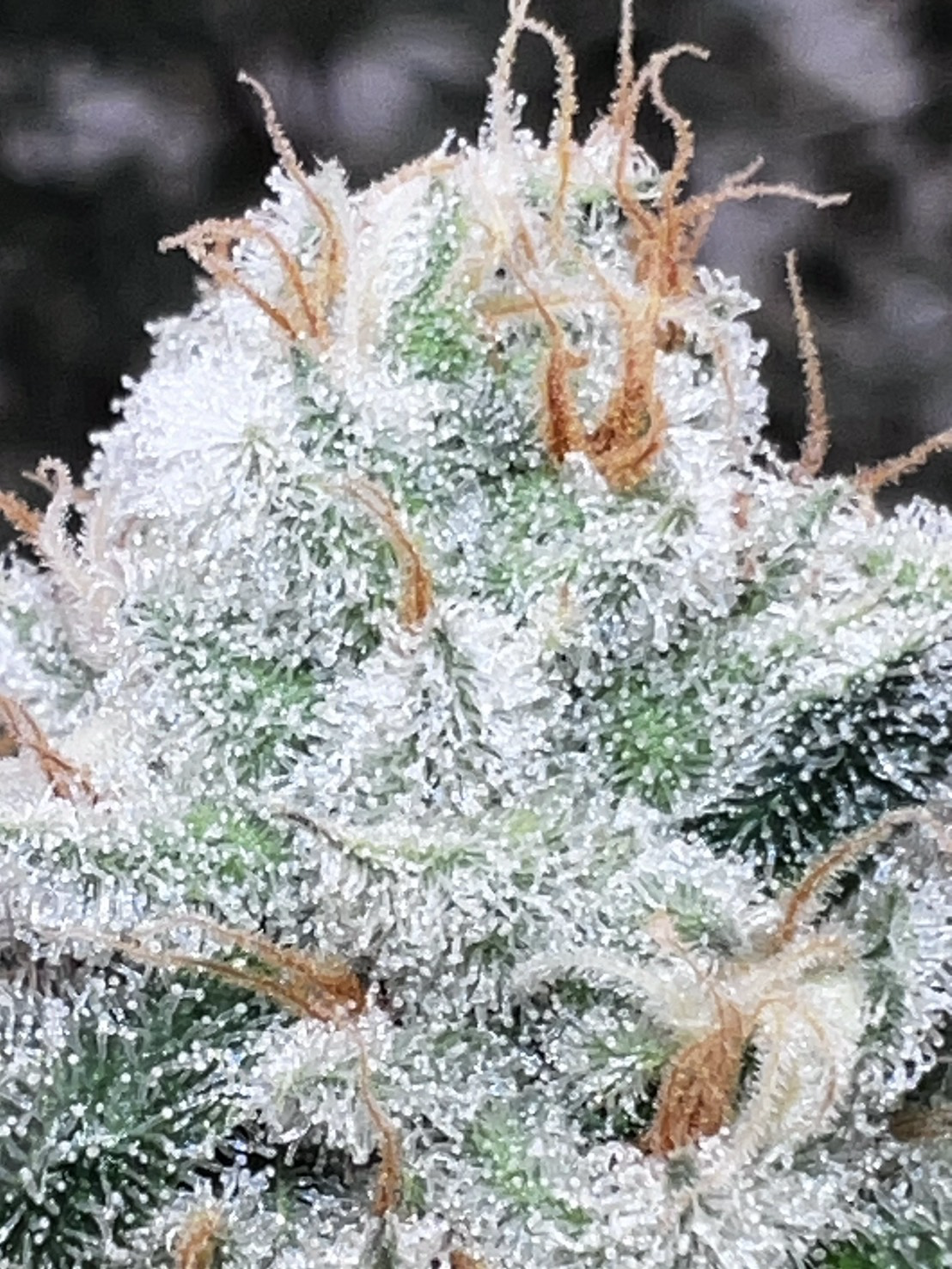
The resin glands known as trichomes are central to flower photography. A macro image can reveal striking surface detail, but it cannot replace an appropriate laboratory analysis of composition or contamination. At BUDS, reading the flower is an observation practice. A claim about treating disease needs a different kind of evidence.
Early evidence and the problem with firsts
Who used cannabis first? The question sounds as though it should have a date attached. Archaeology rarely makes it that simple. A seed establishes the presence of a plant. Fibre may establish a material use. Residue on an object can reveal what was burned. A written passage shows how somebody described a plant. These are different forms of evidence.
Archaeobotanical research traces a long relationship with Cannabis in East Asia, while cautioning against treating every cord impression on pottery as an identification of hemp. The date assigned to an ancient composition must also be distinguished from that of surviving copies. Evidence of a plant's presence thousands of years ago is not automatically evidence of smoking or intoxication. Dal Martello and colleagues
At Jirzankal in Central Asia, researchers analysed residues from wooden braziers in a cemetery dating to around 500 BCE. The findings support cannabis burning in a funerary setting. That context tells us more about possible psychoactive use than an isolated seed would. It still cannot recover the participants' subjective experiences, and it does not describe a modern joint. Ren and colleagues, 2019
The often-repeated date of 2737 BCE, associated with the legendary emperor Shen Nong, belongs to a different evidential category. The transmitted Shen Nong Ben Cao Jing is dated to the early centuries CE, far later than the story commonly attached to it. Separating a tradition from the dating of a text does not dismiss Chinese medical knowledge. It shows how knowledge was collected, reorganised and interpreted over time. Brand and Zhao
A good historical account therefore needs several timelines: the plant's presence, its material uses, evidence of psychoactive use and written medical traditions. Compressing them into a single world-first claim makes the story tidier while making it less accurate.
Food, fibre, religion and everyday life
A history told entirely through flowers leaves out rope makers, weavers and households that used seed. It can also misidentify the materials it celebrates. Botanical and textile researchers warn that common names such as “Indian hemp” have referred to plants other than Cannabis. An old inventory needs botanical and cultural context before it can become evidence. Smithsonian on identifying fibres
The shrine and cemetery findings show that some communities brought cannabis into ritual spaces. They do not establish a universal practice across a religion, all its branches or every historical period. Ritual importance and health risk are separate questions.
Contemporary accounts from Kumaon in the Himalayas describe hemp within food, fibre and inherited local knowledge. From that perspective, the plant is not simply a rare object waiting for an overseas collector to discover it. It is part of a community's work and memory. Growing global interest in local varieties should prompt questions about who maintained them and who benefits when their value rises. Kumaon Khand
Hemp has a place in art as well. Claire Zeisler's 1978 Coil Series III—A Celebration, made with hemp and wool, belongs to a story of texture, form and skilled hands rather than intoxication. The history of the plant has always been larger than the history of its psychoactive compounds. Smithsonian American Art Museum
The story now moves from ritual and daily life into politics. For belief and modern music, jump to Rastafari and Peter Tosh.
The politics of prohibition
Stories with one villain are easy to remember. Harry Anslinger was a consequential force in US cannabis prohibition, but the claim that he invented it because his office had nothing left to police does not fit the chronology.
The 1925 Geneva convention already included international controls concerning Indian hemp. That preceded the creation of the Federal Bureau of Narcotics in 1930 and the US Marihuana Tax Act of 1937. International control was not the product of a single American official. 1925 convention
The US National Archives describes the Bureau of Narcotics as inheriting responsibilities from earlier narcotics-control bodies. Its establishment also preceded the 1933 repeal of alcohol prohibition. Questions about institutional power, budgets and political incentives remain legitimate, but “nothing left to arrest people for” should not be presented as an established explanation. National Archives
The 1937 Senate hearing is revealing in a different way. Anslinger's testimony linked cannabis to frightening accounts of crime and mental disturbance. A hearing documents what an official told lawmakers; it does not establish that those accounts demonstrated causation. Reading the original record lets us examine how alarming stories become political evidence, and how difficult it can be to separate observation from prejudice once an institution has adopted a narrative. Senate Finance Committee hearing
The 1961 Single Convention subsequently placed cannabis within a durable international control framework. Even there, distinctions mattered: Article 28 addresses industrial cultivation for fibre and seed differently. The treaty is more specific than the phrase “the whole plant was simply banned everywhere.” 1961 Single Convention
Once rules are embedded in treaties, domestic legislation, professional practice and public expectations, change takes more than replacing an official or disproving a slogan. This is part of why today's debate concerns institutions and access as well as chemistry. Thailand's history intersects with that international system, but Thai decisions also have their own domestic actors and political context.
International controls also connect to the scheduling changes WHO recommended, which must be distinguished from domestic legal decisions.
Thailand's changing legal landscape
Thailand's cannabis story is often condensed into a dramatic move from prohibition to freedom. The actual sequence contains distinct changes in medical access, narcotics classification and controls on commercial activity.
| Date | Development | What it does and does not mean |
|---|---|---|
| 19 February 2019 | The seventh amendment to the Narcotics Act took effect following publication the previous day | It opened controlled medical and research pathways rather than unrestricted use. Act |
| 9 June 2022 | A new Category 5 narcotics notification took effect | The well-known 0.2% THC provision concerns extracts in its specified legal context; it is not a general maximum for all flowers. Notification |
| 26 June 2025 | A revised controlled-herb notification took effect | It introduced controls on flower supply for medical purposes, including prescribing and sales-channel conditions. Royal Gazette |
| 30 April 2026 | A second ministerial regulation was published | It added premises, personnel and licensing conditions, with transitional provisions for existing licences. This is not equivalent to an order immediately closing every existing outlet. Royal Gazette |
“Is cannabis legal in Thailand?” is consequently an incomplete question. Which part of the plant, what product, which activity, and under which permission or exemption? The Department of Thai Traditional and Alternative Medicine's 2026 material discusses the transition and establishment requirements in more detail. DTAM guidance
Our Thai policy source desk follows the discipline of returning to original documents.
For a publication, keeping dates attached to legal claims is essential. A statement that was useful in 2022 may be inadequate in 2026. This history explains the changing framework; it is not an operating licence or individual legal advice.
Before the medical opening
Thailand's specifically named Cannabis Act carried the year 2477 in its title but was published on 5 May 2478, or 1935. Parliament's museum records an effective date after a 90-day interval. The title's year should therefore not be casually converted into the year the law took effect. Parliament Museum
The 1979 Narcotics Act later repealed that separate cannabis statute and placed cannabis within a broader five-category framework. Section 7 names cannabis as an example of Category 5. The road to 2019 involved changing a legal structure established over decades, not simply changing an opinion about a plant overnight. Consolidated legislation in the Thai FDA archive
Genetics and the language of strains
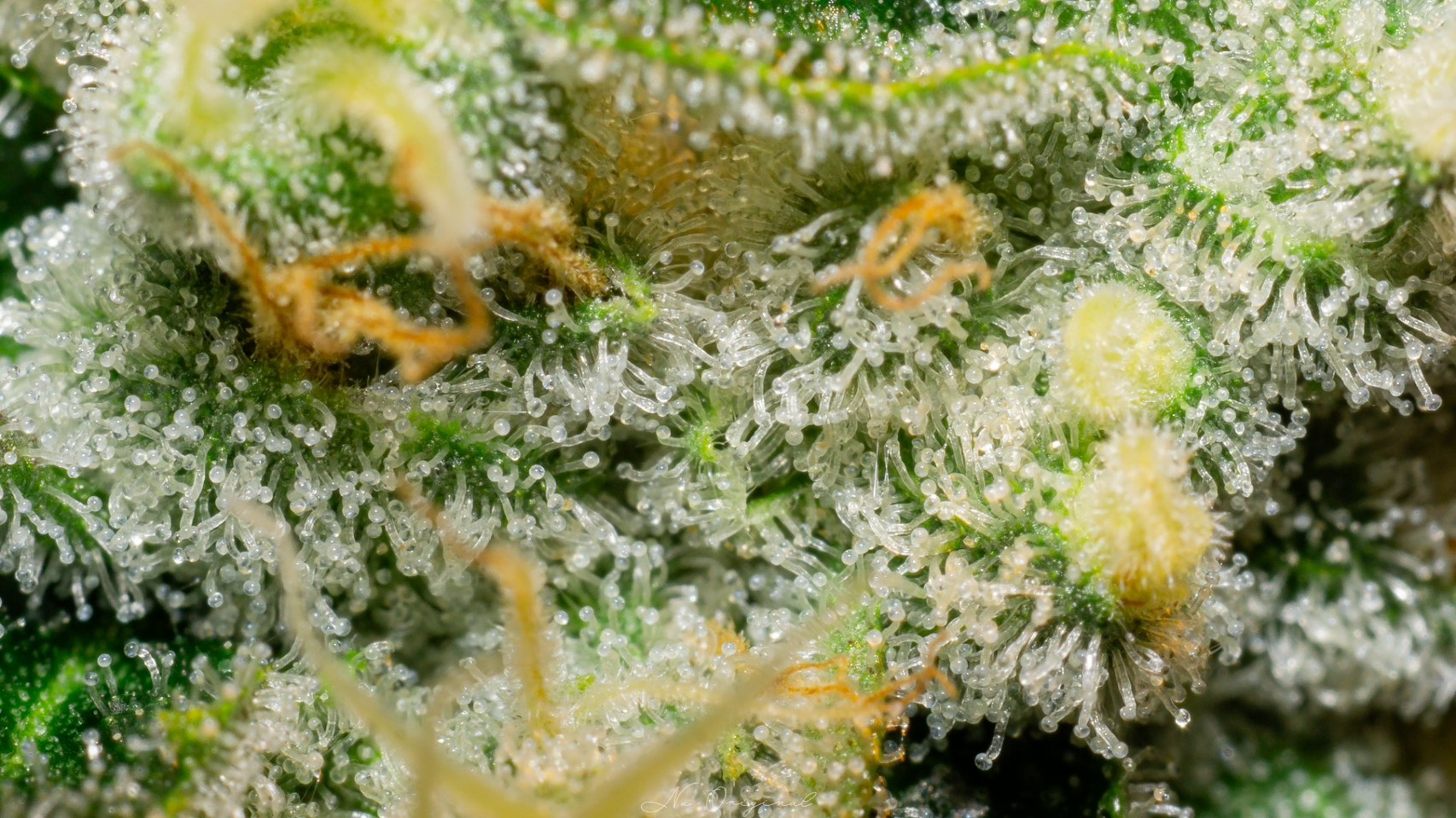
If a strain name is a song title, its genetics are the melody, instruments and history behind the recording. The same title may appear on products from several producers, while related plants may carry different names. Recognising a name should begin an investigation rather than end one.
A 2021 genomic study of 110 accessions placed early domestication in East Asia and examined later divergence associated with fibre and drug selection. Dates inferred from genetic models are estimates. They do not establish the first occasion on which a person used cannabis or experienced intoxication. Ren and colleagues, 2021
| Term | A useful distinction |
|---|---|
| Landrace | A locally associated population shaped by adaptation and generations of human selection, not necessarily a genetically uniform set of plants |
| Heirloom | An inherited line whose value depends partly on a documented history of preservation |
| Cultivar | A selected cultivated variety; everyday commercial naming may be less rigorous than a formal registration system |
| Genotype | Genetic constitution |
| Phenotype | Observable characteristics arising through genetics and environment |
| Chemovar or chemotype | A way of describing chemical composition rather than relying only on a name or plant shape |
Our aroma notebook explores a separate layer of observation beyond the cultivar name.
Sawler and colleagues found that strain names did not reliably guarantee consistent genetic identity. Watts and colleagues found that sativa/indica labels captured limited overall genetic variation, although they were associated with some terpene differences and related genes. This does not mean every plant is identical. It means a label cannot reliably predict a complete experience. Sawler, 2015, Watts, 2021
A separate analysis of nearly 90,000 commercial samples from six US states found substantial chemical overlap among sativa, indica and hybrid categories. These were product measurements, not a trial of human experiences. The results support looking more closely at composition without replacing an oversimplified label with an equally oversimplified aroma-to-effect formula. Smith and colleagues, 2022
Where sativa, indica and ruderalis came from
Kew records Linnaeus' Cannabis sativa name in 1753, Lamarck's Cannabis indica in 1785 and Janischevsky's Cannabis ruderalis in 1924. Its current system accepts C. sativa and treats the other two names as synonyms. These names belong to a history of botanical classification that predates their use as retail shorthand. Kew: sativa, indica, ruderalis
Taxonomists ask how populations are related; consumers often ask how a product will feel. The words overlap, but the questions differ. A classification based on herbarium specimens is not a ready-made mood chart. McPartland and Small, 2020
Cannabinoids include compounds such as THC and CBD, while terpenes contribute to many aromas. Their coexistence raises research questions, but a citrus or earthy smell does not prescribe a human emotional outcome. BUDS can document observations under stated conditions while keeping untested predictions separate.
Apply these naming distinctions to the four documented Thai selections to see how provenance makes a difference.
The people who seek and preserve diversity
Strain-hunting stories are compelling because they combine travel, people and the possibility of loss. “Discovery” needs care, however. A variety newly listed in an international catalogue may have been part of local life for generations.
Malawi and the documentary journey. Strain Hunters identifies its 2008 expedition following Malawi Gold as an important beginning of its film series. Bringing cameras to a place of origin can reveal a world that audiences have never seen. Recording or collecting a plant is still different from creating its genetics. Strain Hunters history
India and names that travel further than farmers. The team's account describes a scouting trip to Himachal Pradesh in June 2009; the India documentary appears in its 2010 chronology. A name such as Malana Cream opens questions about landscape, labour and communities behind a familiar market term. The expedition account is the filmmakers' own record, not independent certification of every conservation outcome. India expedition
Chitral and The Real Seed Company. Angus describes a visit to Chitral preceding the company's foundation in 2007. Its approach makes a useful distinction between material collected at source and material subsequently maintained elsewhere. Documentation turns “preservation” from an attractive word into questions that can be examined. Interview with Angus, RSC principles
Annapurna and Moroccan Beldia. In a 2020 interview, ACE's Dubi discussed maintaining Nepalese material and work involving older Moroccan genetics. First-person accounts help identify the people and projects involved. They do not independently prove genetic purity or long-term conservation success. Interview with Dubi
Together these stories reveal two responsibilities: keeping plants and information alive, and maintaining fair relationships with the communities of origin. Remembering a brand while forgetting a community can preserve part of the genetics while losing part of the history.
Further viewing: Strain Hunters Malawi Expedition, published on the Strain Hunters channel in 2011. It offers a documentary perspective from people involved in the seed business; it is not independent proof of genetic authenticity or therapeutic effects.
Thai genetics in the Golden Tiger story
ACE's history links work with Thai Hmong in 2008 to its Golden Tiger project. Its current description names Koh Chang Thai, Hmong Thai and Malawi lines. The interesting thread is selection across generations: a familiar cultivar name can remain while a breeder changes the balance described for a particular release. ACE history, Breeder's Golden Tiger account
This is a documented breeder account of local genetics entering a breeding project, rather than independent pedigree verification. Asking which generation is meant, and who maintained its source material, makes the story more precise and more interesting.
Seed companies and the people behind them
The seed industry did not begin with online catalogues. Seeds and parent plants circulated through networks of collectors, growers and breeders before recognisable businesses emerged. Their histories show different forms of expertise: maintaining older lines, working with local populations, or selecting traits for commercial cultivation.
| Company and people | Why its history matters | Illustrative names |
|---|---|---|
| Sensi Seeds, founded by Ben Dronkers in 1985 | The company's history distinguishes the founder from breeder Alan Dronkers. Attribution matters as much as recognising a flower name. | Jack Herer, Black Domina. Company history |
| Dutch Passion, Henk van Dalen, 1987 | The company records its introduction of feminized seeds in 1997, a milestone in its seed-development history. | Orange Bud, Passion #1. Company history |
| Serious Seeds, Simon, 1995 | A focused breeding and preservation catalogue. | AK-47, Kali Mist. Company history |
| Mr Nice Seedbank | Shantibaba's account links its 1998 founding to Howard Marks and Nevil Schoenmakers and emphasises retained parent material. | Neville's Haze. Founder's account |
| ACE Seeds | Dubi's account includes Kaiki and Álex “la mano negra”; the work encompasses both preservation and hybrids. | Panama, Zamaldelica. Interview |
| The Real Seed Company, Angus | Its collected accessions should not be confused with varieties invented by the company. | Lebanese and Highland Lao collections. Principles |
| ETHOS Genetics, Colin Gordon | An example of contemporary US breeding and commercial line development. | Mandarin Sunset, Lilac Diesel. Company information |
These are entry points into history, not a league table or shopping recommendations. Company sources establish how companies describe their work. Claims of superior performance or medical benefit need separate evidence. Following parent material, selection records and the people responsible is more informative than repeating promotional superlatives.
Serious describes Simon's biology studies, African travel in 1986 and work at Sensi before founding his company. Simon's history
Its AK-47 account dates the cultivar to 1992 and names Colombian, Mexican, Thai and Afghan ancestry without a complete crossing sequence. A cultivar's story can precede the company built around it. AK-47 account
Serious records Gerrit entrusting Magus parent material to Simon in 2011. Warlock, Biddy Early, Double Dutch and Motavation continued; mothers for Exile and Biddy's Sister had already been lost. This concerns retained plants, not proof of worldwide extinction. Serious Seeds history
Knowing the people and companies makes trophies easier to interpret. Revisit the limits of cultivar names when comparing different releases.
Rarity, price and the meaning of a trophy
Scarcity can mean that little material survives, that a line is difficult to maintain, or that access is commercially restricted while demand is high. All can influence price. None establishes medical effectiveness.
A High Times report dated 6 May 2026 described advertised prices of US$1,566 for a Tire Fire OG clone and US$1,000 for a three-plant Tom Hill Haze set. These were reported offers before an event, not verified completed transactions or flower prices per gram. The figures illustrate a market for access to genetics, not a universal quality scale. High Times report
Difficulty is another kind of cost. Mr Nice describes Neville's Haze as a demanding line suited to experienced growers. That is the breeder's description, not a controlled comparison. “Difficult” may refer to time, variability or management requirements, and it is not a synonym for better. Breeder's description
Four competitions, with the year kept visible
| Competition | Edition verified here | Examples from the published results | How to read the award |
|---|---|---|---|
| Spannabis Champions Cup | 2026 | Sativa: Lemon Curd, Selva Club. Indica: Noir, Terps Army. Official results | Category winners, not a single universal ranking |
| High Times Cannabis Cup Montana | 2026 | Hybrid: Purple Push Pop, Wild Sky Farms. Indica: Baby Yodaz, Wild Sky Farms. Sativa: Ancient Blue Dream, Funk Farm. Results | A particular regional edition, not every High Times event |
| California State Fair Cannabis Awards | 2026 | Golden Bear Indoor: Woodzy, WoodWide. Mixed Light: Blueberry Caviar, Ridgeline Farms. Sun Grown: Pink Rider, Greenshock Farms. Official results | Golden Bear awards differ from individual chemical-category medals |
| The Emerald Cup | 2024 archived results | Best in Show: Headies, Mendo Dope. Indoor: Roswell 47, Decibel Gardens. Sungrown: Double OG Sour, Farmer & the Felon × Rebel Grown. Archived official results | The accessible official edition verified for this article, not a claim that no later event occurred |
Awards recognise entries within particular rules and categories. The entrant or producer is not automatically the original breeder. A winning sample also does not guarantee that every later product sharing its name has the same composition or quality. Most importantly, a competition trophy is not clinical evidence that a product is appropriate for a patient.
Read the judging method before comparing trophies
California's 2026 framework uses laboratory measurements for flower-medal categories, with Budist's 100-point judging for Golden Bear and product categories. Montana uses community judging. For 2024, Emerald Cup's organisers described hiding brands and packaging in flower and concentrate judging and grouping entries with terpene information. These are different ways to evaluate an entry. California guide, Montana organiser, Emerald Cup statement
Spannabis' 2026 results are verified here, but its current 2027 rules are not used as evidence of the previous edition's judging method.
Thai cannabis on the genetic map
Thai cannabis deserves a history more substantial than a souvenir label. Formal records offer one useful starting point because they bind a particular name to an identified registration rather than relying entirely on reputation.
| Registered Thai line | Registration record |
|---|---|
| Hang Kra Rog Phu Phan ST1 — หางกระรอกภูพานเอสที1 | 1685/2564, 27 August 2021 |
| Hang Suea Sakon Nakhon TT1 — หางเสือสกลนครทีที1 | 1686/2564, 27 August 2021 |
| Tanaosri Kan Khao WA1 — ตะนาวศรีก้านขาวดับเบิลยูเอ1 | 1687/2564, 27 August 2021 |
| Tanaosri Kan Daeng RD1 — ตะนาวศรีก้านแดงอาร์ดี1 | 1688/2564, 1 September 2021 |
The Department of Agriculture's records identify DMSc and Rajamangala University of Technology Isan in the registration history. Registration records
DMSc describes ST1 as THC/CBD-balanced, TT1 and WA1 as THC-dominant, and RD1 as CBD-dominant. These descriptions concern studied lines, not every similarly named product. DMSc
“Thai Stick” raises a different issue. Historical descriptions concern a preparation in which cannabis was tied around a small stick. That product name alone does not identify one authenticated cultivar. Treating a famous format as a single genetic line makes the history easier to market and harder to understand. Historical US justice statistics, table 4.26
Claims that Thai varieties won major international awards need the competition, year, category, entry and entrant. A Thai-sounding name is not proof of Thai provenance. This article does not assign a world title where those links have not been verified. The stronger foundation is to build a record that future growers and researchers can actually check.
From amnesty material to documented lines
The registration applications describe seed received through the amnesty process under a letter dated 15 May 2019, consultation with local knowledge holders and three generations of selection involving DMSc, Rajamangala University of Technology Isan and Mahidol. It is a story of community memory meeting systematic documentation. It does not establish a precise original collection location for every seed. ST1/TT1/WA1 application, RD1 application
The reported profiles distinguish ST1's large clusters and mango aroma, TT1's elongated clusters and orange notes, WA1's clustered tips and citrus–lemongrass aroma, and RD1's red stems and fruit notes. These are source descriptions, not BUDS tasting results. DMSc profiles
Keeping the accession or selection code attached to a familiar name is therefore meaningful. It preserves a trail that future research can follow.
The people behind the places will add further human detail to this industry story.
Public figures and cannabis culture
Public figures can make cannabis more visible, but fame does not establish a medical effect. A person's voluntary public statement is also different from speculation about their private life.
In a 2022 interview, Seth Rogen identified Diablo Wind as a favourite. The context matters: he was also a Houseplant co-founder, with a commercial interest in cannabis. His preference is a dated self-report, not proof that a current product with the same name is genetically identical or suitable for somebody else. Forbes interview
An Associated Press interview with Willie and Annie Nelson in November 2024 discusses their relationship with cannabis and edibles. It does not justify inventing a favourite strain for them. Sometimes accurate reporting means preserving the specificity a person actually offered. AP interview
Music, humour and conversation can create belonging around cannabis. They can also make abstaining feel awkward if participation becomes a test of authenticity. A welcoming community leaves room for people who use cannabis, people who have stopped, and people who have never wanted to use it. Shared curiosity is a better foundation than a shared obligation to consume.
When cannabis politics acquires a soundtrack
Peter Tosh's 1976 album Legalize It placed a public political position inside music that travelled internationally. His record label also documents a legalization campaign film from that year. Those public works provide a firmer historical subject than guessing at private behaviour. Legacy Recordings account
Smithsonian's archive holds the 1978 film Rastafari Voices, documenting chanting, reasoning discussions, ritual ganja use and Nyabinghi music. It provides a particular time and community through which to explore belief and sound, rather than treating every reggae listener or Rastafari group as sharing one practice. Smithsonian archival guide
Education, economics, beauty and the environment
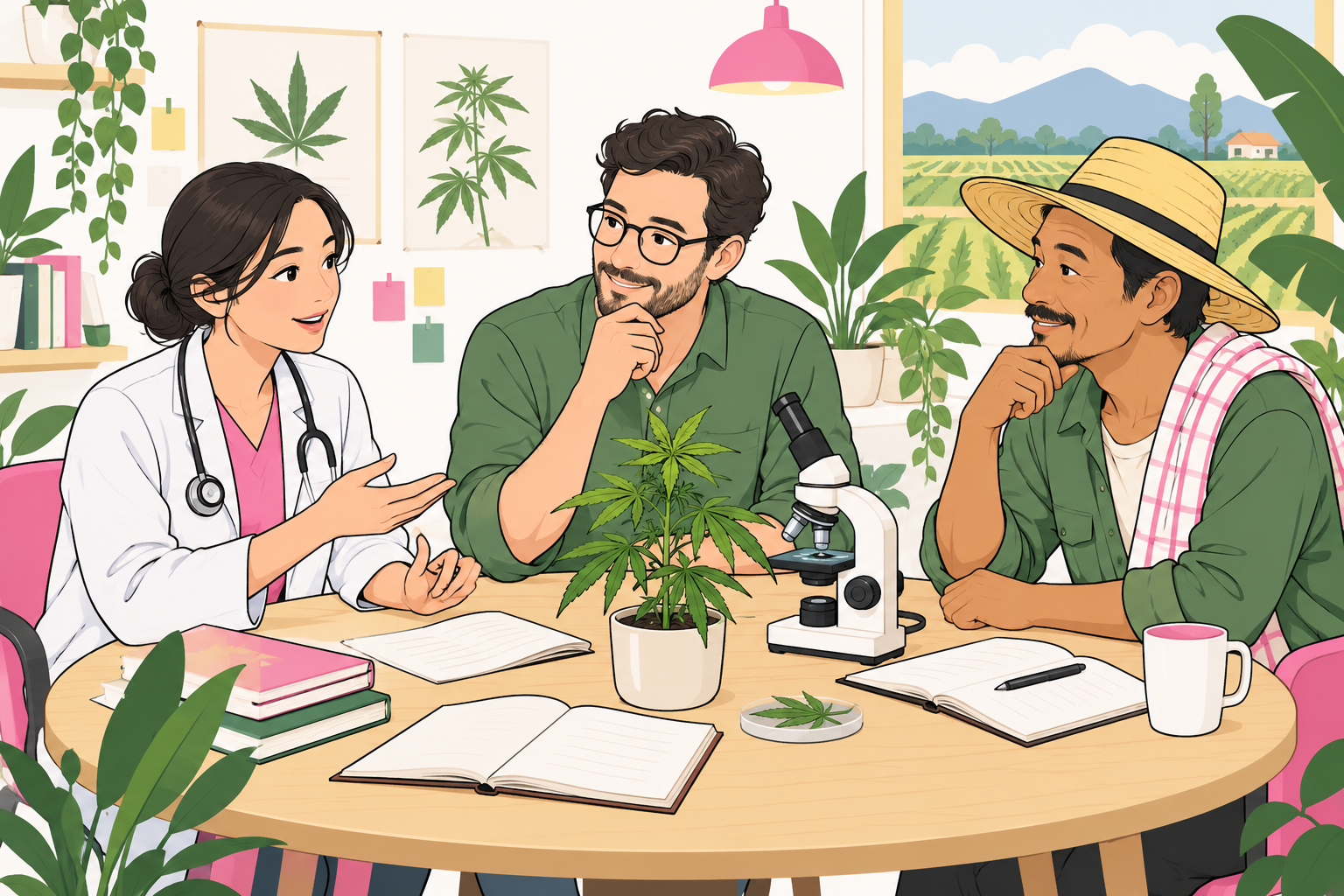
Education is where personal expertise becomes knowledge that can be questioned and transferred. Thai research into local lines brings together botany, genetics and chemical analysis. It demonstrates why a professional industry needs more than cultivation experience: it also needs reliable identification, measurement and documentation. Department of Medical Sciences
UNCTAD examines hemp value chains including fibre, food and materials. Those opportunities are not a current Thai market forecast or a promise that every business will prosper. UNCTAD report
Useful economic questions follow: where is value created, who bears compliance costs, and can smaller producers participate?
Hemp seed oil differs from CBD preparations. FDA describes trace THC and CBD in seed-derived ingredients as potential contamination from other plant material. A leaf on packaging cannot establish cannabinoid content or efficacy. FDA information
Nor does a plant-based ingredient establish a treatment for acne, eczema or another condition. Ingredient identity, finished-product formulation and evidence for a particular claim are different levels of the question. A professional publication should make those levels visible before repeating a beauty promise.
Environmental quality belongs in the conversation too. A US life-cycle study of indoor cannabis production found that climate and energy demands materially affected greenhouse-gas estimates. Its results are not measurements of every Thai farm. They do show why growing conditions and energy systems matter when an industry describes itself as sustainable. Summers and colleagues, 2021
If Thailand wants a reputation for quality, traceability should extend to the people and systems behind the flower. Skilled production and responsibility for its wider costs belong in the same account.
Inside a curriculum, and inside an economic statistic
Rangsit University's 2023–2024 Oriental Medicine bulletin includes a cannabis-science field and the course AIN 353, Knowledge of Cannabis. That is evidence of a formal educational setting, not proof of a separate cannabis degree or of current admissions. It also opens a discussion of careers in analysis, documentation and evidence communication. University bulletin
USDA's April 2026 National Hemp Report values US industrial-hemp production in 2025 at approximately US$739 million. This measures production under the report's definitions, not total marijuana retail sales or the Thai industry's value. Keeping the unit and scope intact makes the number informative rather than merely impressive. USDA report
Medical cannabis and evidence that earns trust
For someone in pain, unable to sleep or caring for an ill relative, hope is not an abstract concept. A report of feeling better deserves to be heard. Turning it into a recommendation for other patients, however, requires more questions: which preparation, for which condition, how much benefit, for how long, and with what unwanted effects?
Those questions protect hope from being oversold. Patients deserve both access to appropriate options and an honest explanation of uncertainty.
From a plant to a medical product
The body has an endocannabinoid signalling system with which plant compounds can interact. A biological mechanism alone does not establish a product's net clinical benefit: wanted and unwanted effects must be studied together. NCCIH
Evidence for purified CBD is not evidence for every oil. Evidence for a particular THC:CBD spray is not an endorsement of every flower. The chain runs from plant to compound, product, indication and the individual patient's circumstances.
Ask a specific clinical question
| Condition or symptom | Relevant evidence or product | Important boundary |
|---|---|---|
| Seizures associated with Lennox–Gastaut syndrome, Dravet syndrome and tuberous sclerosis complex | The US FDA has approved purified cannabidiol, Epidiolex, for patients aged one year and older | A specific medicine and specific indications, not every CBD product or every form of epilepsy. FDA |
| Chemotherapy-induced nausea and vomiting | NICE recommends considering nabilone as an add-on for some adults when conventional antiemetics are insufficient | It is not a blanket replacement for standard treatment. NICE |
| Spasticity due to multiple sclerosis | NICE describes a monitored trial of THC:CBD spray under specified conditions | This is not evidence for smoking flower or for every cause of muscle spasm. NICE |
| Chronic pain | AHRQ's 2025 review finds small average benefits from some products, with much of the evidence concerning short-term treatment of neuropathic pain | Dizziness, sedation and nausea can increase; evidence for whole-plant cannabis remains limited. AHRQ |
| Symptoms in cancer care | Questions must be separated by symptom and product | Symptom management is not evidence that cannabis cures cancer. NCI |
These examples come from US regulation and NICE guidance. They are not a Thai register of approved medicines. Approval in one jurisdiction does not automatically confer approval in another.
Why reasonable institutions can reach different recommendations
A small average benefit does not answer every treatment question. A guideline also considers uncertainty, adverse effects, available alternatives, costs and its health system. NICE does not recommend routine cannabis-based medicines for chronic pain, while a systematic review may still identify a small benefit in selected short-term trials. Those statements address different levels of the decision rather than necessarily contradicting one another. NICE recommendations, AHRQ review
The practical question is not simply whether something can have an effect. It is whether a defined option is worthwhile for a defined patient compared with realistic alternatives, with a plan to assess benefit and stop when it is not helping.
Compared with what, and what other options exist?
AHRQ's studies mostly compared products with placebo or usual care. Evidence against active alternatives remained insufficient, so this does not establish superiority over standard options. AHRQ 2025
Alternatives depend on the condition. For chronic primary pain in people aged 16 and over, NICE recommends supervised exercise and consideration of CBT or ACT. That scope does not cover every form of pain, and these recommendations are not a direct comparison with cannabis. Assessment and shared treatment goals come before selecting an option. NICE NG193
Sleep, stress and the limits of personal experience
BUDS' founding story includes personal experiences of stress and short sleep. Personal experience can explain why someone became interested in cannabis; it cannot establish a treatment result for everyone with similar symptoms. Sleep problems also deserve an assessment of their causes rather than being treated as a product-selection exercise.
The ability of THC-containing products to produce unwanted anxiety is particularly relevant when people seek relief from distress. CDC describes associations between cannabis use and psychosis, with stronger associations for earlier and more frequent use. Association is not a prediction that every user will develop illness, but it is a reason to avoid presenting cannabis as an uncomplicated mental-health solution. CDC
CBD is not a synonym for risk-free
CBD does not produce THC-like intoxication, but it can interact with medicines and carries risks including liver injury and sedation. A reassuring label does not replace a review of other medicines and health conditions. FDA on CBD
Pregnancy and breastfeeding require particular caution. The FDA advises against cannabis, THC and CBD use during these periods. A product being marketed as natural does not remove that concern. FDA guidance
A flower's appeal also says little about contaminants. Identity, consistency, manufacturing controls and appropriate testing are part of medical-product quality. They help establish what a patient receives; they do not, by themselves, prove that it works. Australian TGA quality requirements
The Clean Veteran approach and its limits
BUDS' Clean State approach describes an observational protocol involving an abstinence period and avoiding cross-strain mixing. It can make a sensory record more transparent, but it is not a clinical trial or proof that a person's biology has reset completely. A blood test is not a universal certificate of a “100% pure” sensory response.
A meticulous observer can record anxiety, discomfort and changes over time. Experience does not make severe reactions harmless or allow someone to predict precisely how long another person's distress will last. Describing adverse effects honestly should encourage appropriate care, not endurance as a badge of expertise. Our Clean State protocol belongs to transparent reporting, with those limits kept visible.
BUDS keeps unwanted effects in the conversation alongside the experiences people value.
When use becomes hard to control
Cannabis use disorder involves difficulty controlling use and continuing despite problems. Examples include unsuccessful attempts to stop, using more than intended, or persisting despite harm to work and relationships. Earlier initiation and frequent use are associated with greater risk. Discussing this should support access to care, not stigma. CDC on cannabis use disorder
Stopping can bring irritability, sleep difficulties, anxiety or decreased appetite for some people. These symptoms do not establish that a person needs cannabis indefinitely. Health support can help when symptoms interfere with life or make stopping difficult. MedlinePlus
Cannabinoid hyperemesis syndrome, or CHS, is a counterintuitive concern for a substance sometimes used against nausea. It is associated with frequent use and recurrent vomiting, abdominal pain and potentially severe illness. An accurate use history helps clinicians investigate the cause. CDC MMWR, 2026
Our guide to reading laboratory records explains why numbers need an identifiable sample and source.
Safety beyond a research setting
Feeling in control is not a driving-performance test. Cannabis can affect reaction, judgement and coordination, and alcohol can compound impairment. Neither a fixed waiting interval nor an isolated THC measurement guarantees fitness to drive. CDC on driving
Edible products can have delayed and unexpectedly prolonged effects, encouraging some people to take more before the first effects appear. Products resembling sweets also pose an accidental-ingestion risk to children. Locked storage away from children's sight and reach, separate from ordinary food, matters. CDC on poisoning
Smoking adds exposure to irritants and is associated with cough, phlegm and bronchitis. Changing the route changes the risks rather than removing all of them. CDC on lung health
Suspected poisoning with serious symptoms such as difficulty breathing or loss of consciousness needs urgent medical help, not waiting to finish a sensory diary. NHS on poisoning emergencies
What WHO's position actually means
WHO and its Expert Committee on Drug Dependence evaluate evidence and make recommendations. The Commission on Narcotic Drugs, or CND, votes within the international treaty framework. Scientific advice and a binding international decision are different steps. WHO's 2019 recommendations
On 2 December 2020, the CND voted to remove cannabis and cannabis resin from Schedule IV of the 1961 Convention while retaining them in Schedule I. That recognised medical relevance within continued control; it did not remove cannabis from international scheduling altogether. CND statement
WHO explained the change in terms of facilitating research, development and appropriate medical access while addressing public-health problems associated with nonmedical products. It explicitly distinguished the decision from promoting general legalization. The broad objective is to make legitimate medical benefit and risk management work together. WHO, 4 December 2020
Further viewing: Cannabis use for Common Conditions: Research, fact, and fiction, a 2022 McMaster Alumni lecture featuring researchers Jason Busse and James MacKillop. Read it alongside the newer evidence linked above.
Further reading
Michael Backes' Cannabis Pharmacy, translated into Thai as กัญชาทางการแพทย์ by จารวี นิพนธ์กิจ, is the book BUDS' founder wanted readers to discover. Siam University's library records the Thai edition. A structured book can help readers ask better questions, while changing drug evidence and law still require current sources. Thai-edition bibliography
The path from registered Thai selections, through Thai regulation, to medical evidence shows why a credible future needs both knowledge and trustworthy systems.
The future BUDS THAILAND hopes to see
We want Thailand to become known as the world's finest exporter of quality cannabis. This is BUDS THAILAND's aspiration, not a claim that Thailand already holds that position or a goal WHO has assigned to the country.
To give that ambition substance, quality must mean more than THC percentage or a beautiful flower. It should include reliable identity, consistency, traceability, honest information and compliance with the destination market's requirements. Fair treatment of the people doing the work belongs in the definition too. A credible export reputation begins with trust earned in these details.
Our story in brief begins with personal experience and friendship. Thailand's next chapter is something we hope to help write together.
We hope to see growers and scientists in conversation rather than competing camps. We hope patients are listened to without being sold exaggerated promises. We hope a new generation sees research, craft, quality assurance and social responsibility as meaningful professions within the industry.
Compassion is not a property the plant guarantees to everyone. It is how people choose to treat one another: share accurate information, respect both use and abstinence, admit uncertainty and correct mistakes. A community becomes stronger when nobody has to pretend to know everything.
A single flower contains nature, a grower's work, a history of selection and a user's questions. BUDS THAILAND exists to help those stories meet with curiosity and candour, so that the industry's growth brings knowledge, opportunity and a better life for the people within it.
Sources & further reading
- NCCIH ↗
- Arie and colleagues, 2020 ↗
- UNCTAD on industrial hemp ↗
- Dal Martello and colleagues ↗
- Ren and colleagues, 2019 ↗
- Brand and Zhao ↗
- Smithsonian on identifying fibres ↗
- Kumaon Khand ↗
- Smithsonian American Art Museum ↗
- 1925 convention ↗
- National Archives ↗
- Senate Finance Committee hearing ↗
- 1961 Single Convention ↗
- Act ↗
- Notification ↗
- Royal Gazette ↗
- Royal Gazette ↗
- DTAM guidance ↗
- Parliament Museum ↗
- Consolidated legislation in the Thai FDA archive ↗
- Ren and colleagues, 2021 ↗
- Sawler, 2015 ↗
- Watts, 2021 ↗
- Smith and colleagues, 2022 ↗
- Kew: sativa ↗
- indica ↗
- ruderalis ↗
- McPartland and Small, 2020 ↗
- Strain Hunters history ↗
- India expedition ↗
- Interview with Angus ↗
- RSC principles ↗
- Interview with Dubi ↗
- Strain Hunters Malawi Expedition ↗
- ACE history ↗
- Breeder's Golden Tiger account ↗
- Company history ↗
- Company history ↗
- Company history ↗
- Founder's account ↗
- Company information ↗
- AK-47 account ↗
- High Times report ↗
- Breeder's description ↗
- Official results ↗
- Results ↗
- Official results ↗
- Archived official results ↗
- California guide ↗
- Montana organiser ↗
- Emerald Cup statement ↗
- Registration records ↗
- DMSc ↗
- Historical US justice statistics, table 4.26 ↗
- ST1/TT1/WA1 application ↗
- RD1 application ↗
- Forbes interview ↗
- AP interview ↗
- Legacy Recordings account ↗
- Smithsonian archival guide ↗
- Department of Medical Sciences ↗
- FDA information ↗
- Summers and colleagues, 2021 ↗
- University bulletin ↗
- USDA report ↗
- NCCIH ↗
- NICE ↗
- AHRQ ↗
- NCI ↗
- NICE NG193 ↗
- CDC ↗
- FDA on CBD ↗
- FDA guidance ↗
- Australian TGA quality requirements ↗
- CDC on cannabis use disorder ↗
- MedlinePlus ↗
- CDC MMWR, 2026 ↗
- CDC on driving ↗
- CDC on poisoning ↗
- CDC on lung health ↗
- NHS on poisoning emergencies ↗
- WHO's 2019 recommendations ↗
- CND statement ↗
- WHO, 4 December 2020 ↗
- Cannabis use for Common Conditions: Research, fact, and fiction ↗
- Thai-edition bibliography ↗