Start with the questions that matter
Two flowers look alike. Does that make them genetically identical? Two batches came from the same clonal source. Must their laboratory results match? A familiar cultivar name appears on a label. How much can it tell us about a person's response? These questions sit close together, but require different evidence.
Genotype describes genetic variants; phenotype describes observable or measurable characteristics expressed under particular conditions. They are connected, but are not interchangeable. Phenotype includes more than appearance: measurable plant chemistry is part of it too. The NHGRI definition of genotype and definition of phenotype provide the starting distinction.
This guide moves from definitions to identity testing, evidence-based selection, industrial quality assurance and clinical interpretation. Essential explanations are here; contextual links provide original research or focused reading. Scenarios labelled hypothetical are teaching examples, not BUDS THAILAND experiments.
1. Agree on the vocabulary before examining the flower
In everyday conversation, “genetics” can mean ancestry, a breeder, a commercial name or a DNA result. A professional decision needs those meanings separated.
| Term | What it describes | The question it helps answer |
|---|---|---|
| Genotype | Alleles or DNA variants at one or more specified locations | What genetic pattern does this sample have within the examined scope? |
| Phenotype | Observable or measurable characteristics, including morphology, physiology and chemistry | What characteristics are expressed, and under which conditions? |
| Chemotype | A category defined by chemical criteria, such as the relative predominance of particular constituents | Which chemical category does the sample fit under the stated definition? |
| Chemical profile | Constituents and measured quantities in a sample | What was measured, how much was found and by which method? |
| Cultivar or commercial name | A name assigned to material or a product | What is it called, and what evidence connects that name to this sample? |
This is an evidence-reading framework. Chemistry belongs within phenotype; chemotype categorizes chemical characteristics rather than forming a separate biological universe. Sharing a category does not establish identical concentrations. Aizpurua-Olaizola and colleagues' cannabinoid and terpene study illustrates why category and quantity deserve separate attention.
An allele is a version of a DNA sequence at a location. A genome is the complete DNA complement. Examining selected locations is therefore different from reading the entire genome. “Genetically tested” should always lead to a second question: what was examined?
2. From AA and Aa to questions a single-gene model cannot settle
In a simplified diploid model, alleles at a location can be represented as AA, Aa or aa. Matching copies are homozygous; different copies are heterozygous. These symbols describe inheritance, not quality scores. Homozygosity must also refer to specified locations. See NHGRI's explanation of alleles.
Under complete dominance, AA and Aa can produce the same observed trait despite different genotypes. That simple example explains why matching appearance does not establish matching genetics. For a Thai-language introduction, the IPST Project14 lesson also links to its genotype and phenotype video on YouTube. It teaches general genetics, not cannabis use.
We should not automatically extend a one-gene classroom model to every cannabis question. “Good aroma,” “beautiful flower” and “suitable for a patient” are not consistently defined measurements. An evaluator first needs to explain what was measured, by whom, and whether the claim concerns a plant, a sample in a container or a person's experience.
A hypothetical disagreement makes the problem clear. One reviewer uses “good” to mean a personally preferred aroma; another means reproducible laboratory characteristics. They may choose different samples without either misreading the data. Their objectives diverged before DNA entered the discussion.
3. Environment, plasticity and the meaning of G×E
Genotype contributes to biological characteristics, but observations occur under real conditions. Phenotypic plasticity describes a genotype expressing different phenotypes across environments. Genotype × environment interaction, or G×E, occurs when genotypes respond differently to environmental change. An environmental effect alone does not establish an interaction. See NHGRI's explanation of gene–environment interaction.
Imagine two hypothetical lines representing groups A and B across environments X and Y. Similar changes may reflect a shared environmental effect. If A changes substantially while B changes little, or their relative order reverses, interaction becomes relevant. This is a conceptual example, not a cannabis experiment we conducted.
Campbell and colleagues' 2019 multi-environment hemp study found that genetic, environmental and interaction contributions depended on the measured trait. THC/CBD variation was predominantly explained by genetic components within that study's conditions. It would therefore be misleading to claim that environment changes every constituent equally.
Heritability is not an individual plant's percentage of destiny. It estimates the proportion of variation in a trait attributable to genetic variation within the studied population and environment. A high estimate neither guarantees an individual's result nor makes environmental influences irrelevant. Estimates should not be transported between populations without justification. MedlinePlus Genetics explains this distinction.
4. Chemotype is a category, not a certificate of effects
Cannabis literature uses broad categories based on the relative predominance of THC/THCA and CBD/CBDA, including THC-dominant, mixed and CBD-dominant groups. The specific study's definitions and analytical methods matter. A research category cannot replace measured quantities or a jurisdiction's legal criteria. Toth and colleagues' work on genetic markers and chemotype illustrates a defined research outcome.
Ratio and quantity answer different questions. Two hypothetical samples can have similar ratios while differing in total concentration. A category alone loses information needed to assess a product. THCA and THC also represent different entries in a report; readers need to check the stated compounds, units and definitions of calculated totals.
For BUDS THAILAND, the useful question is: “What do we already know about this sample, and what still needs evidence?” Our guide to matching a laboratory report to its sample explains how to distinguish analytes, results and the scope of testing.
5. Clonal origin does not guarantee identical batch chemistry
Clonal origin describes propagation history. Quality assurance still needs to establish the identity and provenance of the actual sample. A common source is not sufficient reason to skip documentation or reuse an earlier batch's chemical report for a later batch.
In Aizpurua-Olaizola and colleagues' 2016 study of clonal material, THCA/CBDA chemotype categories remained stable during observation while cannabinoid quantities and terpene patterns changed with development. The quality lesson is that stable category and stable concentration are different claims. This does not establish identical behavior for every genotype and environment.
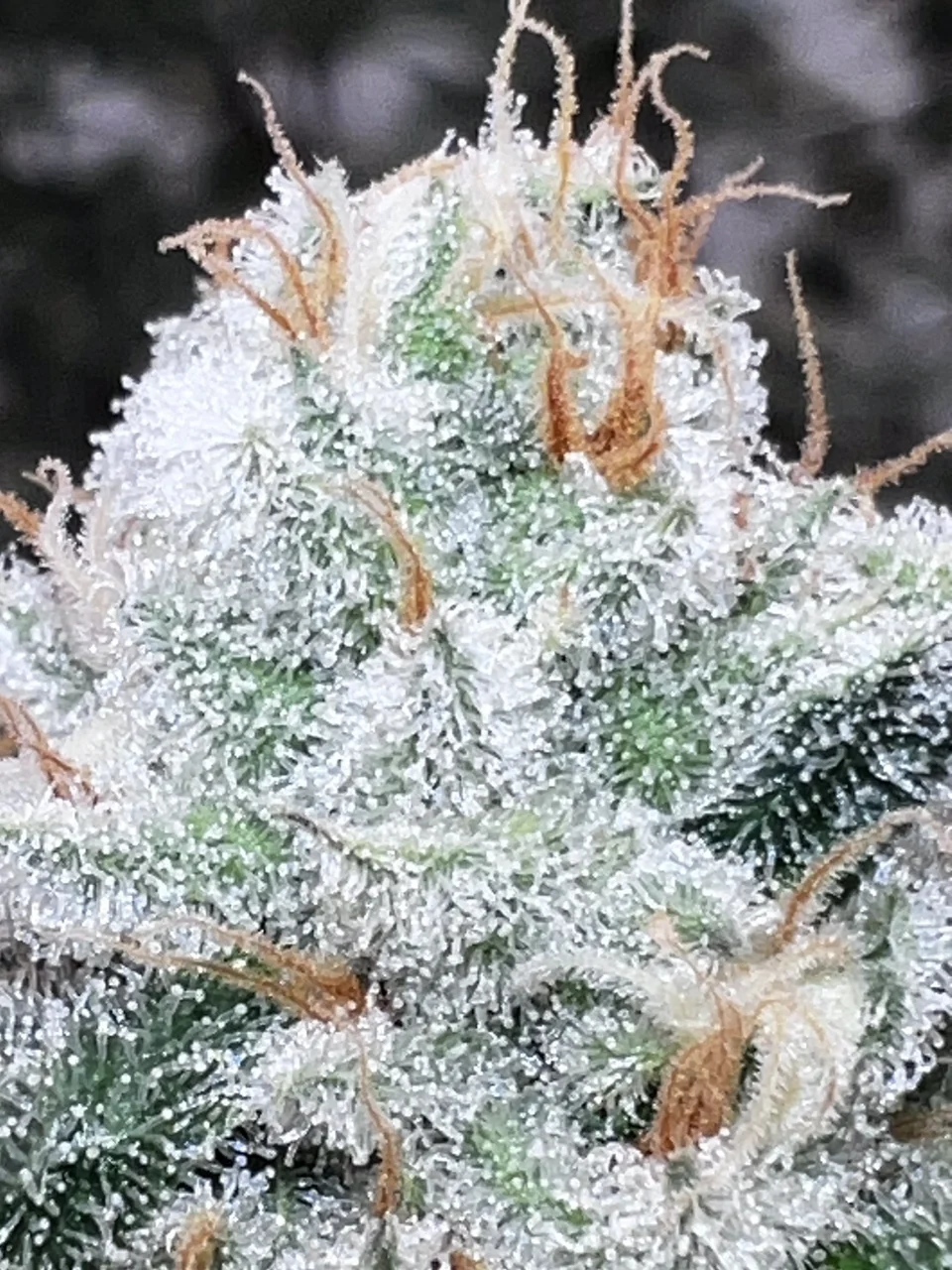
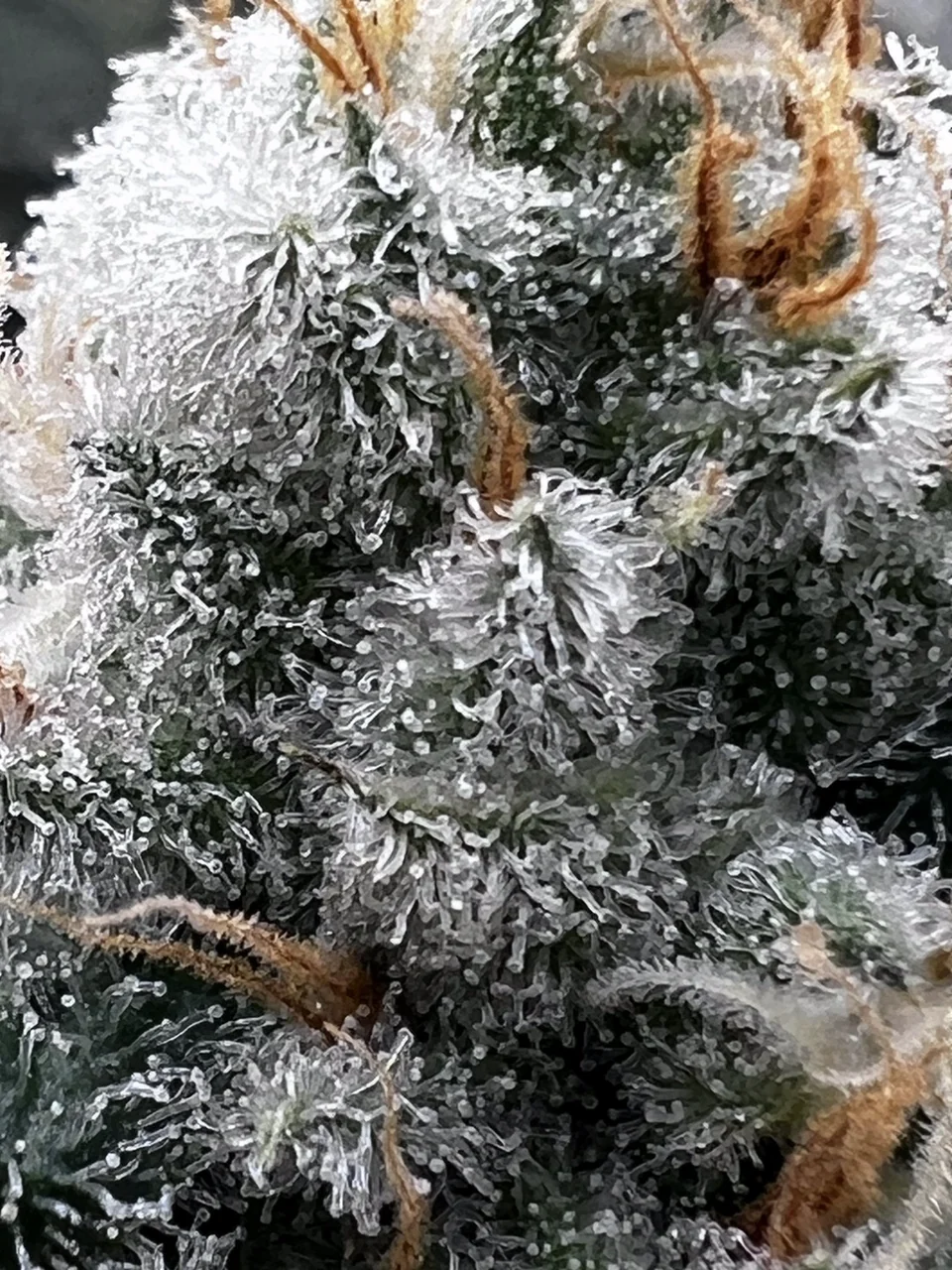
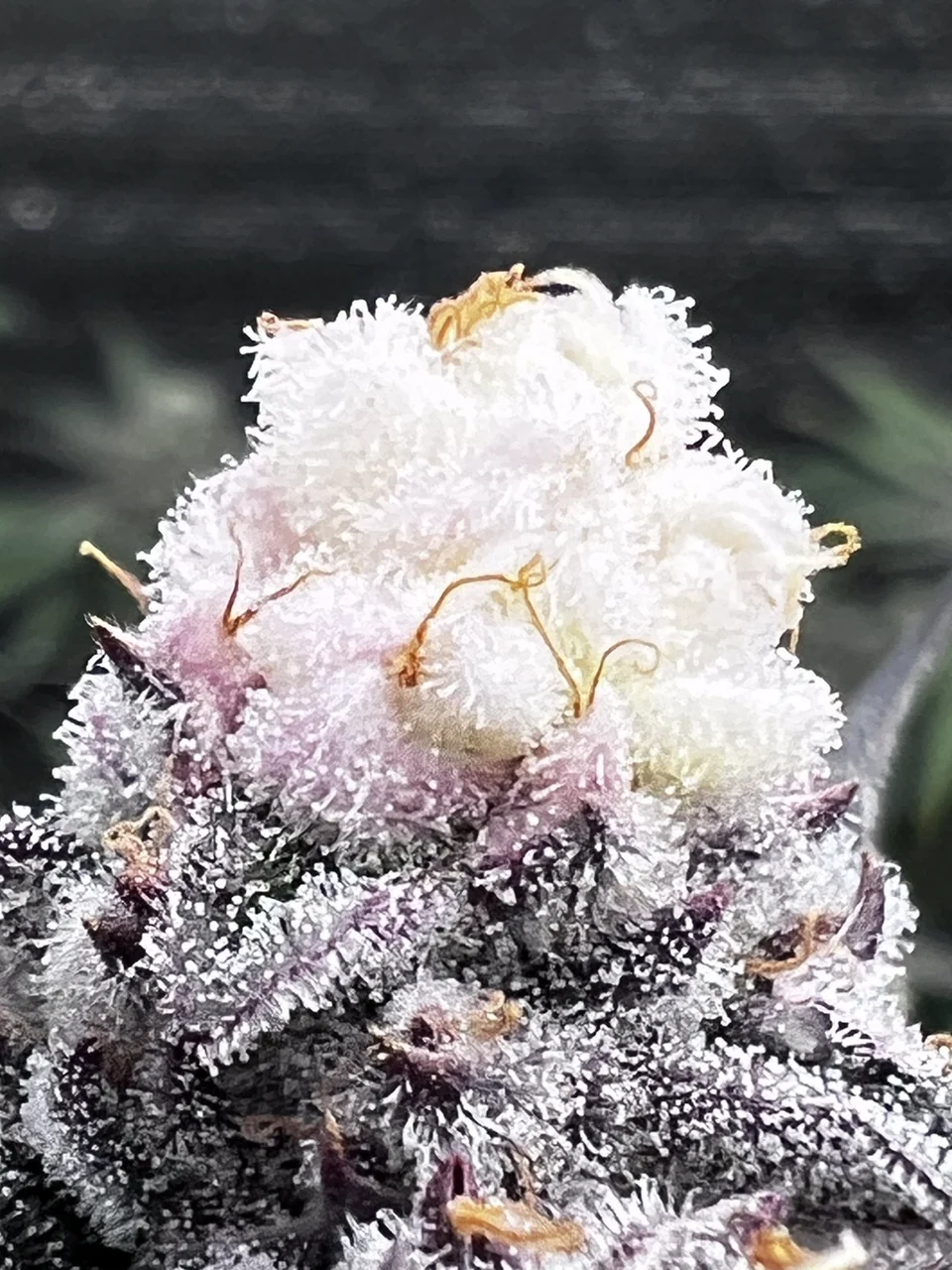
Macro photography makes details easier to see; it does not turn a camera into a DNA instrument. Record visible features first, then identify questions requiring other methods. Our guide to what flower photographs can and cannot establish develops that approach.
6. What cultivar names and Sativa–Indica labels can tell us
Names carry historical and cultural value. Treating them as substitutes for all other data creates excessive confidence. Watts and colleagues, 2021, examined more than 100 samples and over 100,000 SNPs. Sativa/Indica labels did not clearly separate genome-wide genetic groups in that dataset, although they were associated with certain terpenes and related genomic regions. The study did not establish prediction of individual experiences.
Smith and colleagues, 2022, analyzed 89,923 commercial flower chemistry records from six US states, with terpene data for 42,843 samples after filtering. Indica/Sativa/Hybrid labels were limited chemical proxies. Some names were more consistent than chance, but within-name variation remained. Laboratory differences and disclosed business relationships need consideration. This was not a treatment trial.
We need not discard names. We should give the name its own field and keep provenance and test results visible alongside it. When identically named samples differ, examine sample records and measurement methods before declaring mislabelling or misconduct.
The same distinction applies to aroma. “Citrus” describes an observer's perception; it is not an instrumental identification and quantification of molecules. Read about separating aroma descriptions from compound identification to retain sensory observations without overstating their reach.
7. Different DNA tests answer different levels of question
“DNA testing” is not one method. A SNP is a variant at a single DNA base position, as NHGRI explains. Patterns across locations can support comparison, but marker coverage, data quality and reference samples limit interpretation.
| Question | Suitable evidence | What it does not automatically establish |
|---|---|---|
| Is this Cannabis? | Validated identity methods, potentially including appropriate DNA barcoding | A commercial cultivar name or farm of origin |
| Does it match reference material? | A multi-location DNA fingerprint with references and comparison criteria | Identity across the entire genome |
| Which constituents are present, and how much? | Chemical analysis linked to the sample and batch | DNA alone cannot quantify constituents in that container |
| Is a product appropriate for this patient? | Product-specific evidence and clinical assessment | Plant genetics alone cannot establish human benefit or safety |
This table selects evidence types, not laboratory procedures. Xiang and colleagues, 2025, used DNA barcodes and specific markers, including blinded samples, to aid Cannabis identification. Their conclusion concerns the genus, not certification of commercial cultivars or THC percentages.
When a report says “database match,” ask which references the database contains, who established their identities and how an absent true reference is handled. A database returning a name every time is not necessarily correct every time. An explicit inconclusive result can be more informative than unsupported certainty.
8. An associated marker is not a universal guarantee
Markers can narrow a question, but association, causation and validated prediction are different achievements. NHGRI's GWAS explanation distinguishes statistical associations from subsequent investigation of biological function. An interesting location on a genetic map is not a complete mechanism.
Toth and colleagues, 2020, developed and validated markers for sex and cannabinoid chemotype. The study illustrates the need for a defined outcome and performance assessment. Its findings should not become promises to predict every aroma, every quality attribute or patient response.
For people commissioning tests, we suggest asking about intended use, development samples, independent validation, errors and conditions where the method should not be used. If performance is reported only on the data used to create the method, its usefulness on new material remains a separate question.
A sophisticated technology name cannot compensate for a mismatch between test and decision. Changing the question from chemical classification to safety requires suitable additional evidence; it does not justify expanding an existing certificate indefinitely.
9. How genotype and phenotype support responsible selection
Here, selection means evaluating material and evidence for lawful research or quality systems. This is not a potency ranking, breeding recipe or cultivation optimization guide.
Genotype helps address identity and relationships; phenotype addresses observed characteristics. Selecting on one alone leaves the other questions unresolved. A source's reputation can justify investigation, but cannot replace evidence about the material actually received.
We propose four connected decision questions: What characteristic is required, and how is it defined? Where did the sample come from, and how credible is its identity? How consistent is the evidence when reassessed? What risks or missing information still prevent a conclusion? This is an editorial reasoning framework, not a BUDS THAILAND certification scheme.
In a hypothetical comparison, A looks exceptional in one photograph but lacks provenance. B appears unremarkable but has linked identity and analytical records. For a traceability-dependent project, B may be better prepared for further evaluation. That decision concerns evidence readiness, not a declaration of genetic superiority.
Professional selection also includes deferring judgment. If different traits were measured, reporting bases differ or uncertainty has not been separated from meaningful variation, “establish comparability first” may be more responsible than choosing an immediate winner.
10. Industrial quality: make evidence travel with the sample
At industrial scale, departments must be able to identify the same material. Material IDs, batch IDs, receipt dates, transfers, laboratory reports and decisions should connect. Attractive photography and a disconnected test PDF do not close that gap.
The US FDA Botanical Drug Development guidance describes considering raw-material controls, chemical testing, manufacturing and, where appropriate, biological assays and clinical evidence together to support therapeutic consistency. Its context is US botanical drug development, not certification of all cannabis products or Thai law.
| Role | The question to pass to the next team |
|---|---|
| Genetic-material custodian | Which identity evidence belongs to this identifier, and what remains unconfirmed? |
| Researcher or evaluator | How was the characteristic defined and measured, and what limits apply? |
| Laboratory | Which sample, analytes, units and methods does the report describe? |
| Quality assurance | Has the evidence been compared with agreed specifications, and do deviations need investigation? |
| Clinical team | Does the actual product match the evidence being considered, and how are human outcomes followed? |
This is our proposed communication framework, not a substitute for jurisdiction-specific requirements. Its purpose is to transfer uncertainty as well as results, rather than reduce an entire evidence trail to an unexplained “pass.”
11. Laboratory uncertainty and standards we should name accurately
A laboratory result measures a sample within a defined scope. Before comparing numbers, check analytes, units, reporting basis, methods and batch linkage. Biological variability and measurement uncertainty are distinct. A small numerical difference should not automatically become a meaningful quality difference.
The 2024 NIST RM 8210 Hemp Plant information sheet is an instructive example: it provides non-certified reference values with expanded uncertainty and states that they do not establish metrological traceability to the SI. Calling it a certified reference material, or treating its use as certification of every batch, would be incorrect.
The EMA specification guideline for herbal medicinal products discusses chromatographic fingerprints, stability and appropriate contaminant considerations. A chemical fingerprint is a different method from a DNA fingerprint, despite their shared metaphor.
Thai evidence belongs in this discussion too. A 2021 Department of Medical Sciences proficiency-testing study used cannabis test materials for chlorpyrifos, cypermethrin and cadmium. It developed and assessed the homogeneity and stability of materials intended for laboratory proficiency testing, not contamination prevalence across the whole market, and is not a test of the flowers pictured on this website.
A non-detection should therefore be read within the method's scope and capability before being expanded into “free of contaminants.” For a practical document-reading framework, see our COA and test-scope guide.
12. Four hypothetical situations that separate the evidence
Similar flowers, conflicting paperwork
Two containers look alike, but their material identifiers do not agree with transfer records. Resolve sample linkage before declaring genetic identity from photographs. A DNA comparison only becomes meaningful when the tested container and reference are known.
Matching tested DNA positions, different chemistry reports
Do not immediately assume one test is wrong. First establish whether the reports address different questions, then examine sample comparability, units and methods. Agreement in DNA evidence does not automatically invalidate a chemical analysis.
One excellent score from one assessment
An impressive first result can generate a question; it does not establish consistency. Better lighting, a more flattering photograph or prior knowledge of a name may affect what is being judged. Appropriate blinding and recorded conditions make the reasoning easier to examine later.
Two people respond differently to the same product
Neither experience becomes “wrong” because it differs from the other. Nor does the disagreement establish changed plant genetics. Human context, the actual product and clinical evidence matter. These are hypothetical reasoning exercises, not patient cases or BUDS THAILAND test results.
13. What researchers ask beyond “the result looked good”
A research question must be examinable: how does a specified marker relate to a defined characteristic? The next question is whether the design can distinguish alternative explanations. An exciting result and a dependable conclusion deserve separate attention.
We suggest a five-line reading note: What was studied? How many samples, and from where? What was the comparison? How was the outcome measured? Where does the conclusion not apply? This helps resist extending findings from one population to every genotype, or moving plant findings directly into medicine.
More measurements do not necessarily mean more independent samples. Repeated measurements of the same material can inform analytical questions, but should not be described as an equal number of independent biological observations. This is a reasoning check, not an allegation against a particular study.
Look beyond averages to variation, missing information, stated limitations and conflicts of interest. A business relationship does not automatically make a finding false; it is context for assessing possible bias. Good reading preserves both the result and its boundaries.
14. The clinical perspective: plant genetics is not a treatment outcome
Separate four stages: plant identity → product composition → human exposure: amount, route and patient context → benefits and harms. Evidence for the first stage does not fill the remaining three automatically. The plant's genotype is also different from a patient's genetic information.
NICE NG144 prescribing recommendations consider treatment history, mental health, dependence risk, organ function, concurrent medicines and patient-specific circumstances. This UK guidance illustrates clinical reasoning; it is neither a Thai prescribing rule nor a tool for selecting flowers independently.
The 2025 AHRQ living review found small average pain benefits for certain product groups alongside increased adverse events. Evidence was largely short-term and concentrated on neuropathic pain; whole-plant cannabis evidence remained insufficient for broad conclusions. A cultivar name should not stand in for the studied product.
CBD and terpenes require examination of trials, not advertising alone
| Human study | Finding within the studied conditions | What remains unestablished |
|---|---|---|
| Englund and colleagues: 46 healthy infrequent-user completers in a double-blind crossover trial | At the ratios tested, adding CBD to inhaled THC showed no evidence of reducing the measured acute cognitive and psychotic-like effects | Not proof that all CBD products lack benefits, or evidence covering long-term patients |
| Zamarripa and colleagues: 18 healthy adults, oral extracts and a concurrent enzyme-probe drug cocktail | Compared with the same THC dose without CBD, with the enzyme-probe cocktail present in both conditions, the high-CBD condition increased THC exposure, anxiety, sedation and some impairment outcomes | Not a cultivar comparison; route alone cannot explain differences from other trials |
| Spindle and colleagues: 20 healthy intermittent cannabis-user completers; isolated D-limonene and THC administered by vapor inhalation | Some anxiety and paranoia ratings decreased, while other acute effects were generally unchanged; the highest D-limonene condition involved only 12 participants and was always last | Not proof that citrus-smelling flower treats anxiety, or validation of a whole-plant entourage effect |
These studies refine questions; they do not justify self-mixing compounds or changing treatment, especially when products and contexts differ. “Contains CBD” and “terpene-rich” should not become guarantees against anxiety or other risks.

Experienced observers' accounts remain valuable as personal observations, but are not controlled treatment trials. Our Clean State recording framework and its limits keeps that distinction visible. The documentary's medical-evidence chapter provides broader context.
15. Why this matters for Thai cannabis
If Thai cannabis is to earn international trust, compelling origin stories should travel alongside information that others can examine. We want producers to explain material identity, product consistency and the limits of their claims across departments and borders.
The Thai Department of Agriculture registration records illustrate why document types matter: readers need the actual identifier, applicant and certificate category. A plant registration is not a batch COA or a treatment certificate. Our documentary discusses four Thai selections and their registration identifiers.
The vocabulary does more than make a conversation sound scientific. It lets genetic-material custodians, researchers, laboratories, quality teams, clinicians and readers ask the right questions of one another. It reduces the chance that an interesting story grows into an unsupported claim.
BUDS THAILAND's hope for world-class Thai exports includes responsibility for people's quality of life. Lasting confidence should come from evidence that can be examined and corrected, including honesty when results disappoint. Read our vision for Thai people and the industry: an aspiration, not a claim that the goal has already been achieved.
16. Questions you should now be able to answer
How are genotype and phenotype related, and how do they differ?
Both describe aspects of an organism. Genotype concerns genetic patterns; phenotype concerns observable or measurable characteristics. Their relationship must be interpreted for the specific trait and conditions, rather than inferred from a name or photograph alone.
Can a flower photograph establish genotype?
A photograph documents visible features, not DNA sequences. Similarity can prompt investigation; it does not establish identity across genomic locations.
Is chemotype the same as a chemical profile?
A chemotype is a category under stated criteria; a profile describes sample chemistry. Samples in the same category can differ quantitatively. Neither is itself a treatment outcome.
Can a DNA result replace a COA?
No. They address different questions. Identity comparisons need appropriate references; analytical reports need connection to the actual sample, batch and tested panel.
Can this guide replace a clinical assessment?
It explains evidence, not an individual's treatment. Additional cultivar or chemical information does not remove the importance of medical history, concurrent medicines and adverse effects.
What is the most useful first question?
“What decision are we making, and does this evidence actually answer it?” Identify missing information before deciding. That habit serves readers, researchers and quality professionals alike.
Sources & further reading
- NHGRI: Genotype ↗
- NHGRI: Phenotype ↗
- Aizpurua-Olaizola et al., Journal of Natural Products, 2016 ↗
- NHGRI: Allele ↗
- IPST Project14: Genotype and phenotype (Thai lesson) ↗
- IPST Project14: Genotype and phenotype (Thai video) ↗
- NHGRI: Gene–environment interaction ↗
- Campbell et al., Agrosystems, Geosciences & Environment, 2019 ↗
- MedlinePlus Genetics: Heritability ↗
- Toth et al., GCB Bioenergy, 2020 ↗
- Watts et al., Nature Plants, 2021 ↗
- Smith et al., PLOS ONE, 2022 ↗
- NHGRI: SNPs ↗
- Xiang et al., Genes, 2025 ↗
- NHGRI: Genome-wide association studies ↗
- FDA: Botanical Drug Development, 2016 ↗
- NIST: RM8210 information sheet, 2024 ↗
- EMA: Specifications for herbal medicinal products, Rev.3 ↗
- Thai Department of Medical Sciences: cannabis laboratory proficiency testing, 2021 ↗
- NICE NG144: Prescribing recommendations ↗
- AHRQ: Living review of cannabis for chronic pain, 2025 ↗
- Englund et al., Neuropsychopharmacology, 2023 ↗
- Zamarripa et al., JAMA Network Open, 2023 ↗
- Spindle et al., Drug and Alcohol Dependence, 2024 ↗
- Thai Department of Agriculture: plant registration certificates (ร.พ.2) ↗