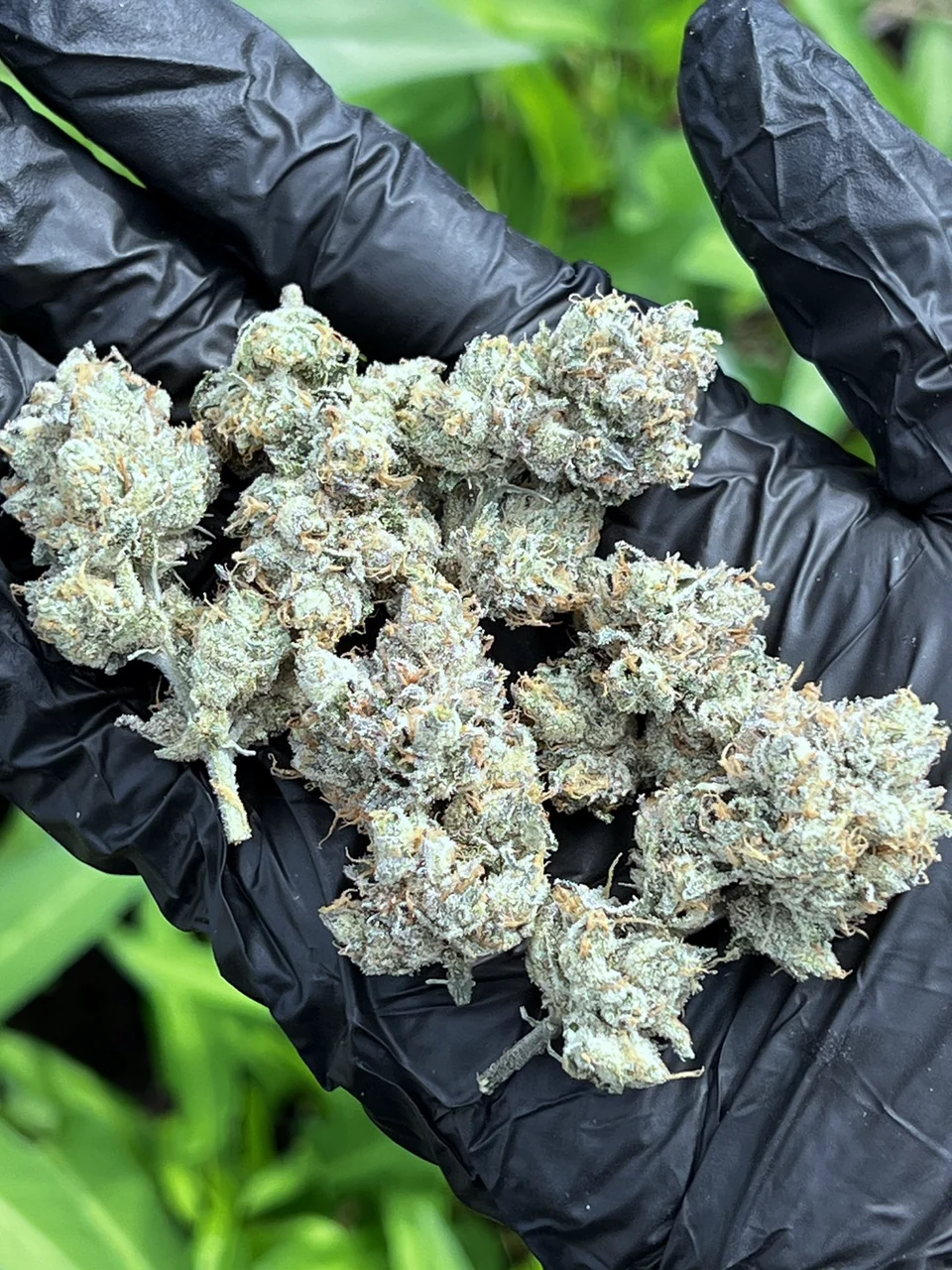
The place we want Thailand to earn in cannabis
BUDS THAILAND wants Thailand to become an exporter of the world’s highest-quality cannabis, alongside good working lives and a compassionate society. This is our aspiration, not a market ranking or an achievement already demonstrated. The question behind it is how to recognise quality in evidence rather than in a slogan.
Our interest in the people of this field leads us to the work behind an attractive flower photograph: documentation, communication, listening and acknowledging incomplete information. We want to tell human stories alongside evidence. We sell neither flowers nor seeds, and do not want industry excitement to overshadow patients, workers or communities.
Quality should be explainable and inspectable
For us, quality has at least three layers: the specimen has provenance, the data has a documented method, and the claim stays within the evidence. A beautiful image may invite attention; “trustworthy” should lead to identifiers, documents and accountable people. Transparency does not require publishing private information or every confidential detail, but it rules out implying nonexistent evidence.
Reading laboratory reports is therefore a valuable public skill, as is separating a cultivar name from genotype, phenotype and chemotype. Careful use of these terms helps producers, researchers, clinicians and general readers ask one another more precise questions.
Let skills and quality of life develop together
We want knowledge that welcomes newcomers’ questions, work with clear responsibilities, and room to report problems without pressure to tell only positive stories. Expertise should include the ability to hand over and review work, not merely the ability to use difficult terminology.
Compassion is practical in our vision: listen to patients without promising outcomes, hear workers without exposing information they did not consent to share, and correct errors with the reader’s interests ahead of the author’s pride. A community should have room for both achievement and unanswered questions.
What would count as progress?
The following is an editorial discussion framework, not an official indicator set or a company assessment. Its questions ask for inspectable evidence so that “world-class quality” means more than an impression.
| Area | Question | Possible discussion evidence |
|---|---|---|
| Provenance | Can a specimen be matched to its documents? | Specimen identifiers and appropriately redacted document history |
| Workforce skills | Can staff explain their work and its limits? | Training and review examples authorised for publication |
| Problem resolution | How are errors corrected and communicated? | Correction history and rationale without sensitive disclosures |
| Human benefit | Who benefits, who bears costs, and whose voice is missing? | Consented accounts with verifiable supporting information |
Research, healthcare, industry and media have different roles
Researchers test explanations; healthcare professionals assess benefits and risks in a patient’s context; businesses are accountable for their records and operations. A publication such as BUDS should make difficult topics understandable without pretending to perform all those roles. Where evidence is missing, we should direct a clear question to the right person rather than inventing a satisfying ending.
Industry ambitions should coexist with careful reading of Thai policy documents and the actual scope of medical cannabis evidence. Our aspiration is not investment or export advice. It is a position that growth should bring knowledge, accountability and better lives.
Start with a story we can examine together
What BUDS can do now is tell careful stories, cite evidence accurately and welcome corrections. We want to meet people with these questions, whether they work in a laboratory, care for patients, participate in the industry or study its culture. Contact the BUDS team to share a story. This space succeeds when a conversation deepens our understanding of both people and evidence.